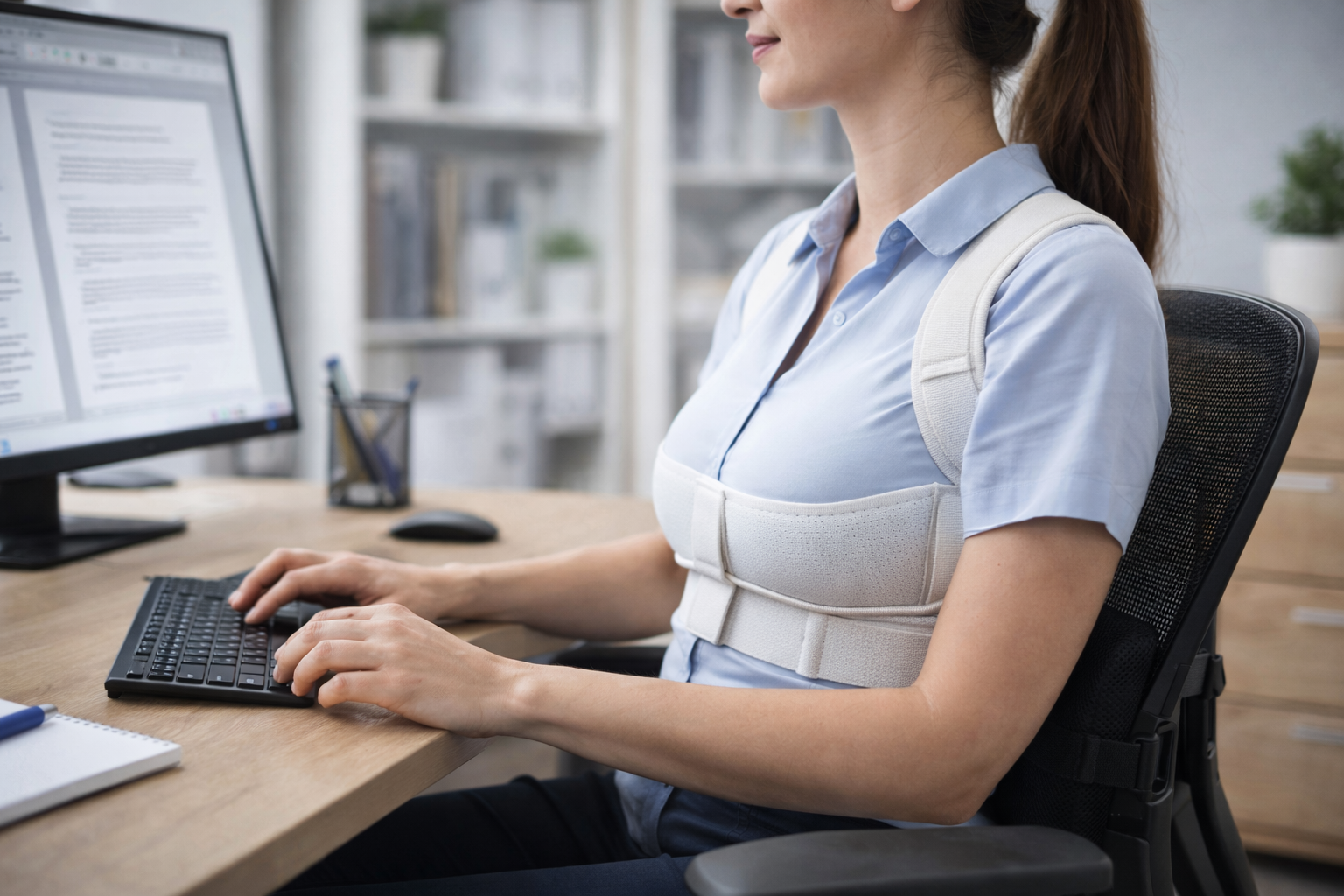
Posture and Chest Support for Women Working Long Desk Hours
By 3 pm, it often sneaks up on you. That tight pull across the shoulders. A dull ache between the shoulder blades. A subtle heaviness through the chest and upper back that makes sitting tall feel like hard work. If you spend most of your day at a desk, you are not alone. Many Australian women juggling work, family, and busy schedules quietly carry this discomfort for years, assuming it is just part of modern life. It does not have to be.
Why desk work hits women’s posture differently
Long hours at a desk challenge anyone’s posture, but women often feel it sooner and more intensely. Breast weight, hormonal changes, and differences in upper body muscle distribution can all place extra load on the neck, shoulders, and thoracic spine. Add a laptop that sits a little too low and a habit of leaning forward during intense focus, and posture starts to collapse without you noticing.
Over time, this can lead to rounded shoulders, neck stiffness, tension headaches, and even restricted breathing. Poor posture also affects how confident and energised you feel. Slumping does more than strain muscles. It changes how your body functions.
This is where posture and chest support becomes more than a comfort accessory. It becomes part of caring for your long term health.
What posture and chest support actually does
Good posture support is not about forcing your body into an unnatural position. It is about gentle guidance. The right support helps remind your muscles where neutral alignment lives, especially when fatigue sets in.
Chest support plays a key role here. When the chest is properly supported, pressure is reduced through the upper back and shoulders. This makes it easier to sit upright without constant muscular effort. Breathing often feels easier too, as the rib cage has room to expand instead of collapsing forward.
Think of it like scaffolding during a renovation. It does not replace the structure. It simply holds things steady while strength and stability rebuild.
Signs your body is asking for support
Your body is very good at sending signals. We just get used to ignoring them. If any of these sound familiar, posture and chest support may help:
- Frequent upper back or neck pain after desk work
- Shoulder grooves or tension from bras by the end of the day
- Feeling exhausted from simply sitting upright
- A habit of leaning forward as the day goes on
- Discomfort that improves when you lie down or stretch
These are not signs of weakness. They are signs of load exceeding capacity.
Choosing support that fits real life
Support should fit into your day, not disrupt it. Many women worry that posture aids will feel bulky or restrictive. The reality is that modern designs are lightweight, breathable, and discreet enough to wear under everyday clothing.
Look for adjustable features that allow you to control tension. This matters because support needs change across the day. Morning posture is not the same as late afternoon posture. A well designed posture and chest support adapts with you.
If you are exploring options, resources around chest posture support can be a helpful starting point, especially those created with rehabilitation and injury prevention in mind.
Small habits that amplify the benefits
Support works best when paired with simple daily habits. You do not need a complete workstation overhaul.
- • Raise your screen to eye level if possible
- • Keep feet flat on the floor and hips slightly higher than knees
- • Take two minutes every hour to roll shoulders and reset posture
- • Breathe deeply into the ribs a few times each hour
These small resets stop tension from building silently.
Emotional confidence matters too
Posture affects more than muscles. Many women notice they feel more confident, less guarded, and more present when their chest is open and shoulders are relaxed. That subtle shift can change how you engage in meetings, how you carry yourself after work, and how your body feels when you finally get home.
Support is not about correction. It is about permission. Permission to feel comfortable, supported, and strong while doing the work that matters to you.
A supportive path forward
Long desk hours are unlikely to disappear. What can change is how your body experiences them. Investing in posture and chest support is not indulgent. It is practical. It is preventative. A quiet way of saying your health deserves attention now, not later.
If you are ready to reduce daily discomfort and support your body through long workdays, explore Bodyassist’s range of posture solutions designed with real bodies and real lives in mind.
FAQs
1. Can posture support weaken my muscles?
Ans. Quality support encourages better alignment without replacing muscle function. When used correctly, it helps muscles work more efficiently rather than switching off.
2. How long should I wear posture and chest support each day?
Ans. Many women start with one to two hours and gradually increase based on comfort. Listening to your body is key.
3. Is posture support suitable if I already have pain?
Ans. Yes, many people use support as part of pain management. If pain is severe or persistent, consult a healthcare professional.
4. Can I wear it under work clothes?
Ans. Most modern designs are discreet and breathable, making them suitable for daily wear under standard office clothing.
5. Does posture support help with breathing?
Ans. Improved alignment often allows better rib cage expansion, which can make breathing feel easier and more relaxed.
Disclaimer
The information provided in this article is for general educational and informational purposes only and is not intended as medical advice. Posture and chest support recommendations may help with comfort and alignment during desk work, but individual needs vary. This article is not a substitute for professional medical evaluation, diagnosis, or treatment. If you experience persistent pain, discomfort, or any health concerns, consult a qualified healthcare professional before using posture or chest support products. Results may vary, and Bodyassist products or strategies mentioned are not guaranteed to prevent or treat any medical conditions.